
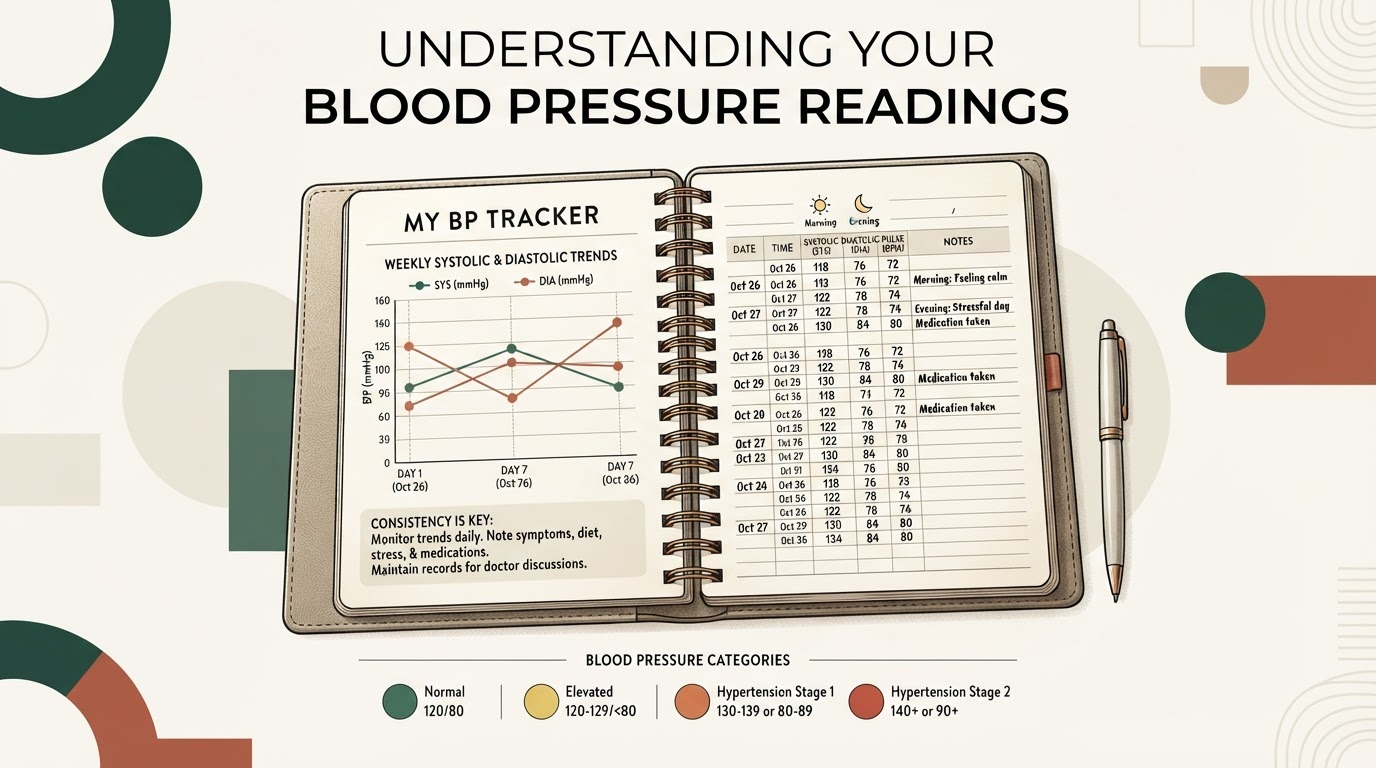
Understand Blood Pressure Readings: Home Tracking, Journaling, and Doctor Prep Guide
Why Home Blood Pressure Tracking Feels Like a Rollercoaster—and How to Steady the Ride
Picture this: You sit quietly, arm cuff inflating with a familiar whoosh, heart thumping in anticipation. The numbers flash—128/82 one morning, 142/88 the next evening. What gives? If you're among the millions tracking blood pressure at home, these fluctuations can spark anxiety, leaving you wondering if your efforts are futile. But here's the truth: variability is normal. Understanding blood pressure readings starts with demystifying the numbers, spotting patterns, and turning raw data into actionable insights for your doctor.
Home blood pressure tracking empowers you to catch trends early, sidestepping the pitfalls of clinic-only checks. Yet confusion reigns without context. This guide unpacks the basics, equips you with a blood pressure journal strategy, and arms you with doctor-ready talking points. Let's transform those bewildering digits into clarity.
Blood Pressure Numbers Explained: Systolic, Diastolic, and What They Reveal
Decoding the Top and Bottom Numbers
Every reading packs two vital stats: systolic (top number) measures pressure when your heart beats, pushing blood through arteries. Diastolic (bottom) gauges the rest between beats, when your heart relaxes. Normal home readings hover below 135/85 mmHg, but targets vary by age, health, and clinician advice.
Think of systolic as the peak surge of a wave crashing ashore; diastolic, the calm trough. Elevated systolic often signals stiffening arteries with age, while high diastolic hints at ongoing vessel tension. To understand blood pressure readings fully, average multiple checks—don't fixate on singles.
Morning vs. Evening: Why Timing Matters
Blood pressure dips at night, surges upon waking—a circadian rhythm. Morning readings often run 10-20 mmHg higher than evenings. Track both: average three mornings and three evenings weekly for a true picture. This reveals if your numbers explained through patterns, not outliers.
The Sneaky Culprits: White-Coat, Masked Hypertension, and Daily Swings
Ever notice clinic spikes? That's white-coat hypertension—nerves jacking numbers 20-30 mmHg. Conversely, masked hypertension lurks normal in-office but high at home. Daily flux comes from caffeine jolts, salty meals, stress spikes, or post-exercise pumps. Even poor sleep or forgotten meds skew results.
Home blood pressure tracking shines here, exposing these ghosts. Consistency is key: same arm, seated, rested five minutes, feet flat, no talking.
Master Your Blood Pressure Journal: What to Log for Crystal-Clear Patterns
Essential Entries Beyond the Numbers
- Time and position: AM/PM, sitting upright.
- Lifestyle factors: Caffeine, alcohol, exercise within 30 minutes? Note it.
- Medication timing: When last dose?
- Sleep quality: Hours and restfulness.
- Symptoms: Headaches, dizziness, fatigue?
A robust blood pressure journal turns chaos into trends. Jot three readings per session, discard first (cuff artifact), average the rest. Weekly, compute morning/evening averages. Spot surges post-coffee? Patterns emerge.
For effortless tracking, check out the private blood pressure journal course at Heart Vitals. It simplifies sharing trends with your clinician, plus reading basics lessons.
Prep for Your Doctor: Summarize, Share, and Ask the Right Questions
Craft a One-Week Snapshot
Print or screenshot your log: "My weekly home average: 132/84. Mornings 138/88, evenings 126/80. Spike after exercise Tuesday." This beats vague recall.
Key Questions for Targeted Advice
- What’s my ideal home target average?
- How often should I track?
- At what thresholds should I call you?
- Any tweaks to meds or lifestyle?
Take the Heart Vitals assessment beforehand for personalized baselines.
Urgent Red Flags: When to Act Fast
Hypertensive crisis: Systolic ≥180 or diastolic ≥120 demands prompt care. With chest pain, shortness of breath, back pain, numbness/weakness, vision changes, or speech issues—call emergency services immediately.
No severe symptoms? Recheck correctly. If persistent, contact your clinician pronto.
This guide educates but does not diagnose. Medication changes or treatment decisions belong solely with your clinician.
From Fluctuations to Empowerment: Your Next Steps
No more number roulette. With disciplined home blood pressure tracking, a thoughtful blood pressure journal, and sharp doctor prep, you reclaim control. Patterns whisper truths that single readings shout falsely. Start logging today—your heart will thank you tomorrow.
