DASH Diet for Blood Pressure: Lower Naturally with Foods, Low Sodium Tips & Meal Ideas
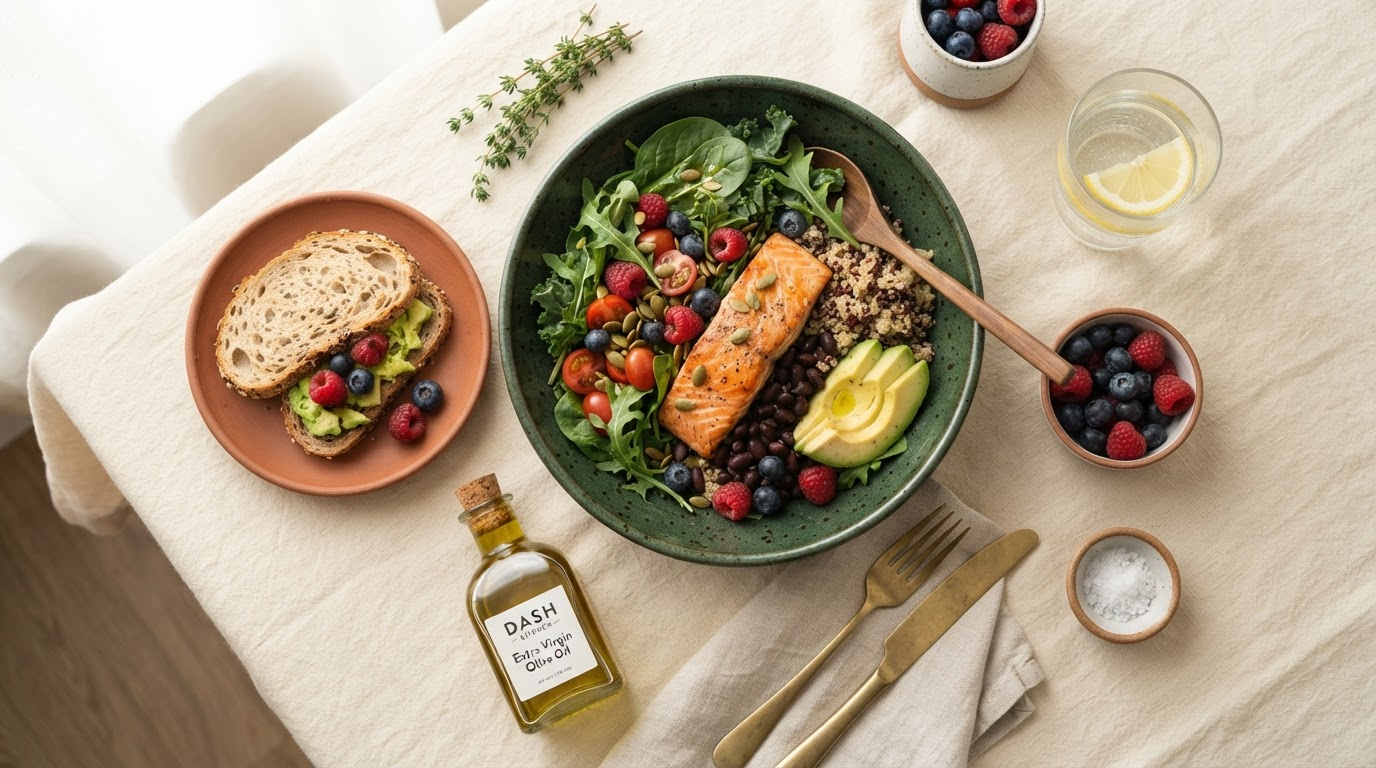
Picture this: a vibrant plate of roasted vegetables, tender grilled salmon, and a sprinkle of nuts, all working in harmony to support your heart. No drastic overhauls, just smart, flavorful choices. If you're navigating high blood pressure, the DASH diet for blood pressure offers a natural path through everyday foods. Developed by the National Institutes of Health, DASH—Dietary Approaches to Stop Hypertension—emphasizes whole foods to foster root-cause habits alongside your doctor's care.
This blood pressure diet isn't about deprivation. It's a flexible framework rich in fruits, vegetables, whole grains, and lean proteins, proven in studies to make a difference when paired with medical guidance. Ready to lower blood pressure naturally with foods? Let's explore practical low sodium diet tips and meal ideas that fit real life.
Understanding the DASH Diet for Blood Pressure
At its core, the DASH diet for blood pressure prioritizes nutrient-dense foods that naturally counterbalance sodium's effects. Think potassium-packed bananas and spinach, fiber-filled oats, and magnesium-rich almonds. These aren't random picks—they target the building blocks of heart health.
The goal? Aim for 2,300 milligrams of sodium daily, or ideally 1,500 if your clinician recommends it. But it's not extreme restriction; it's awareness. Swap processed bites for fresh ones, and you'll find your natural path to steadier readings.
Low Sodium Diet Tips: Master Label Reading
- Scan breads: Choose whole-grain loaves with under 150mg sodium per slice—avoid those sneaky "healthy" traps over 300mg.
- Deli meats: Opt for low-sodium turkey or roast beef; rinse canned options to cut salt by 40%.
- Sauces and dressings: Homemade vinaigrettes with olive oil and lemon beat store-bought, where sodium hides in the top three ingredients.
Pro tip: Compare "per serving" sizes. A little detective work unlocks big wins for your blood pressure diet.
Power Foods to Lower Blood Pressure Naturally
Focus on these DASH diet for blood pressure stars: vegetables and fruits for fiber and potassium (chat with your clinician about potassium if you have kidney concerns), legumes like lentils for plant protein, whole grains such as quinoa, and lean choices like fish, poultry, nuts, seeds, and olive oil drizzles.
The Practical Plate Method
Fill half your plate with colorful produce—beets, berries, broccoli. A quarter gets whole grains or legumes. The last quarter: lean protein. Drizzle olive oil, season with herbs. This simple visual builds balanced, satisfying meals every time.
Root-cause habits start with the plate in front of you.
Sample DASH Meal Days: Realistic and Delicious
Day 1: Energizing Start
- Breakfast: Oatmeal with banana slices, chia seeds, and a handful of unsalted almonds.
- Lunch: Quinoa salad with chickpeas, cherry tomatoes, cucumber, feta (low-sodium), and olive oil-lemon dressing.
- Dinner: Baked salmon, steamed broccoli, sweet potato wedges.
- Snack: Apple with a few walnuts.
Day 2: Hearty Comfort
- Breakfast: Greek yogurt parfait with berries, flaxseeds, and whole-grain toast.
- Lunch: Turkey wrap in spinach leaves with avocado, bell peppers, hummus.
- Dinner: Grilled chicken stir-fry with mixed veggies and brown rice.
- Snack: Carrot sticks with unsalted peanut butter.
Day 3: Fresh and Light
- Breakfast: Smoothie with spinach, pineapple, yogurt, and pumpkin seeds.
- Lunch: Lentil soup (homemade, low-sodium) with side salad.
- Dinner: Tuna salad (water-packed, rinsed) over greens with olive oil vinaigrette, whole-grain roll.
- Snack: Pear and a square of dark chocolate.
Mix and match—these frameworks keep variety alive without overwhelm.
Pantry Swaps and Grocery List Tips
Transform your kitchen effortlessly:
- Swap canned soup for broth-based veggie versions.
- Ditch table salt for spices like garlic powder, rosemary.
- Choose unsalted nuts, low-sodium beans.
Grocery guide: Prioritize the produce aisle first—leafy greens, citrus, potatoes. Hit grains (oats, barley), proteins (fresh fish, eggs, tofu), and frozen berries for convenience. Read labels aisleside; stock up on olive oil and herbs.
Safety First: Personalize Alongside Your Doctor's Care
These strategies complement—not replace—your medical plan. Never tweak medications or supplements without clinician input. Track how foods affect your patterns with tools like the Heart-Vitals Assessment for a personalized starting point. Dive deeper with the Heart-Vitals course ($27/month), featuring food modules and a private journal.
Find your natural path: one flavorful bite at a time. Your heart will thank you.
